Traditional Emirati Clothing Explained: From Heritage to Modern Identity
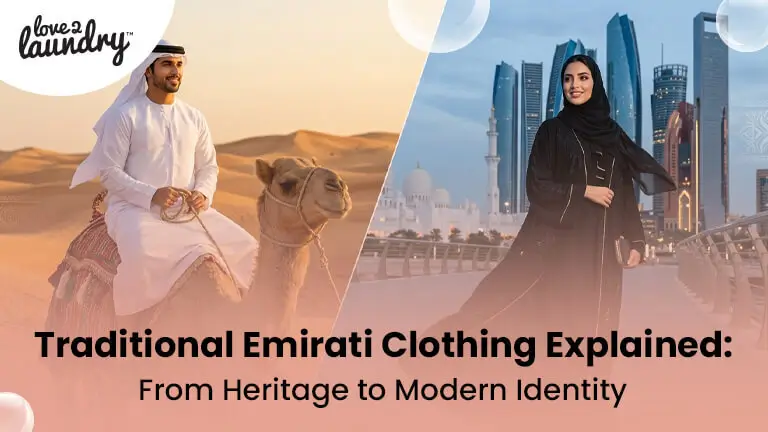
In the heart of the United Arab Emirates, traditional Emirati clothing serves as a powerful bridge between a storied past and a dynamic future. For generations, these garments have provided essential protection against the harsh desert sun while upholding deep-rooted values of modesty and grace. To a visitor, the sight of a crisp white robe or a flowing black cloak might seem simple, but each stitch carries the weight of a nation’s history. Modernity has brought new fabrics and global fashion trends, yet the core silhouette of the UAE’s traditional clothes remains unchanged.
This attire is more than just fabric; it is a visible declaration of national pride and a commitment to cultural preservation in a rapidly globalizing world. Understanding the nuances of these garments is the first step toward appreciating the rich tapestry of life in the Emirates. As lifestyle demands increase, the care for these precious items has transitioned from simple home washing to sophisticated maintenance. This guide explores the intricate details of traditional Emirati clothing, offering insights into its history, components, and the specialized care required to keep these symbolic pieces in pristine condition for years to come.
Why Traditional Emirati clothing Matters in the modern UAE
The history of traditional Emirati clothing is a narrative of adaptation. In a region where temperatures often soar, clothing had to be functional. Today, even with air-conditioned skyscrapers, the traditional Emirati clothing remains the standard for both formal and informal life.
It acts as a unifying force among citizens. While expatriates bring diverse fashions, the local Emirati dress stands out as a symbol of sovereignty and belonging. It reminds the younger generation of their Bedouin roots, where every accessory had a specific survival purpose.
Traditional Emirati Men’s Clothing
The Emirati clothes men wear are designed for maximum airflow and sun reflection. The ensemble is composed of several distinct layers that have evolved from heavy wools to breathable modern textiles.
Kandura (Dishdasha)
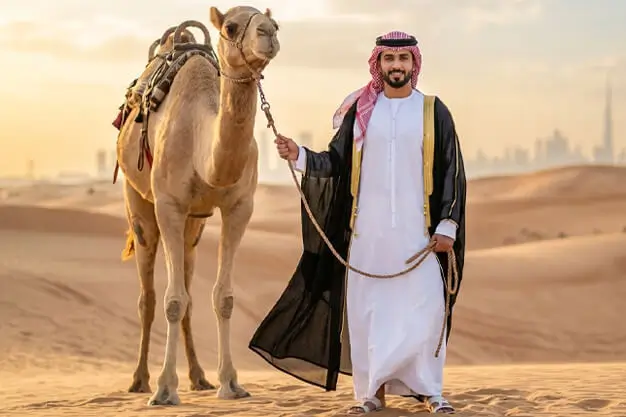
The Kandura is the most recognizable part of the Emirati outfit. This ankle-length robe is typically white to reflect heat. Unlike versions in other Gulf countries, the Emirati Kandura is collarless. It features a unique long tassel called the Al Farukhah or Tarboosh. This tassel was historically dipped in perfume to mask the scent of desert travel. Today, it is a hallmark of the Emirates’ traditional clothes for men. Men often own dozens of these robes to ensure they always appear fresh and crease-free.
Ghutra and Shemagh
The headgear is essential for protection. The Ghutra is a plain white square of cotton, while the Shemagh features a red-and-white checkered pattern. Both are folded into specific styles, such as the “Cobra” or “Eagle,” which can signify a man’s personality or the formality of the event.
Agal
The Agal is a thick black cord made from goat wool. It is used to keep the Ghutra or Shemagh secure on the head. Historically, Bedouins used this cord to hobble their camels at night, showing how deeply functional the history of traditional Emirati clothing truly is.
Bisht (Ceremonial Cloak)
No UAE traditional dress for men is complete for a wedding or religious festival without the Bisht. This is a sheer, flowing cloak worn over the Kandura. It usually comes in black, beige, or cream with real gold or silver embroidery (zari) along the edges. It is a sign of prestige and status.
Traditional Emirati Women’s Clothing
Women’s Emirates traditional clothes are a beautiful blend of privacy and luxury. While the outer layers are modest, the inner garments are often vibrant and highly detailed.
Abaya
The Abaya is the classic black cloak worn by Emirati women. It has undergone a fascinating history of the abaya, moving from a simple piece of heavy wool to a high-fashion garment. Modern Abayas use Nidha silk, crepe, and chiffon. They often feature intricate embroidery or crystals, allowing for personal expression within the bounds of tradition.
Kaftan or Jalabiya
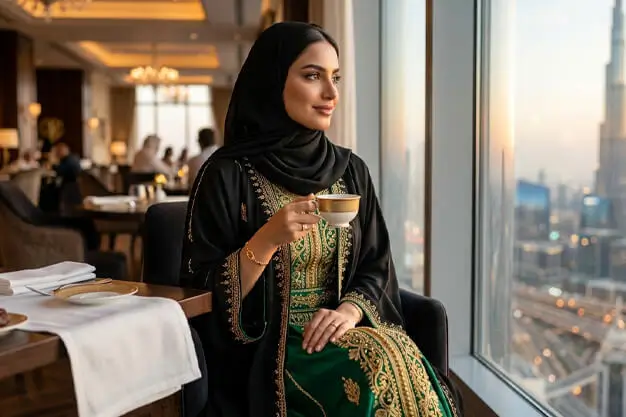
The Jalabiya is a colorful, embroidered dress worn at home or during female-only gatherings. These are often made of silk or cotton with heavy gold thread work around the neckline. Learning specific tips for washing traditional Jalabiya Dress is vital because the dyes and metallic threads are highly sensitive to standard detergents.
Hijab and Shyla
The Shyla is the light, black headscarf worn by women. It is wrapped elegantly around the head to complement the Abaya. Like other UAE traditional clothes, the fabric is chosen for its breathability in the humid coastal air.
Gishwah and Burqa
The Gishwah is a thin veil that covers the face, while the traditional Emirati Burqa is a metallic-looking mask made of dyed fabric. The Burqa was once used to protect the skin from the sun and sand, though it is now mostly worn by the older generation as a mark of heritage.
Traditional Emirati Clothing for Special Occasions
During Eid, National Day, or weddings, Emirati traditional clothes become even more ornate. Men will wear a freshly starched Bisht and carry a Kunjal (ceremonial dagger). Women opt for “Mukhawara” dresses, which are Jalabiyas with heavy crystal work. These special occasion pieces represent the pinnacle of Emirati dress and require professional handling to maintain their brilliance.
How Traditional Emirati Clothing Has Evolved Over Time
The history of traditional Emirati clothing shows a shift from survival to style. In the pre-oil era, fabrics were limited to what could be traded, mostly heavy cotton and wool. Today, the UAE is a global hub for luxury textiles. We now see traditional Emirati clothing infused with French lace and Japanese silk. Despite these influences, the core modesty of the UAE traditional clothes remains the priority.
Caring for Traditional Emirati Clothing: Laundry & Dry Cleaning Tips
Proper maintenance is the only way to protect your investment in traditional Emirati clothing. These garments are often made from delicate fibers that do not react well to high heat or harsh friction.
When to Choose Professional Dry Cleaning
You should seek professional help for any garment with silk, embroidery, or heavy beadwork. Professional cleaners use specialized solvents that remove oils from perfumes without fading the deep black of an Abaya. This is also the best way to get expert pricing for bulk cleaning of daily wear.
Everyday Laundry Care for Daily Wear
For daily cotton Kanduras, you can follow specific tips for taking care of the Dishdasha at home. Always use cold water and avoid the dryer. If you are washing at home, remember that white fabrics need a gentle bleaching agent to stay bright, rather than harsh bleach, which yellows the fibers over time.
Why Choose Professional Laundry & Dry Cleaning in the UAE
The climate in the Emirates introduces unique challenges like sand, sweat, and oil-based perfumes. A professional laundry and dry cleaning service understands the UAE’s traditional clothes better than a standard home machine. We offer precision pressing for Ghutras and specialized care for the Al Farukhah. If you have delicate items, you can contact us to learn more about our heritage-safe cleaning processes.
FAQs – Traditional Emirati Clothing
What is an Emirati thobe called?
The national robe for men in the United Arab Emirates is specifically known as a Kandura or a Dishdasha. It is distinguished from other regional versions by its collarless neck and the long decorative tassel called the Farukhah.
What’s the difference between a jubba and a thobe?
A thobe is generally a simple ankle-length robe used for daily wear across the Gulf region. In contrast, a jubba often features more structured tailoring or heavier fabrics and is frequently used for formal or religious settings.
Which is better jilbab or an abaya?
The choice depends on personal preference as the abaya is a light cloak worn over clothes, perfect for the heat. A jilbab is typically made of thicker fabric and offers more structure, often serving as a complete outfit.
Preserving Heritage Through Proper Clothing Care
Preserving the integrity of traditional Emirati clothing is a vital part of honoring the UAE’s cultural identity. From the functional origins of the Bedouin Ghutra to the modern, crystal-embellished Abaya, these garments reflect a society that values both its roots and its progress. Whether you are wearing an Emirati outfit for a business meeting or a UAE traditional dress for a family wedding, the way you care for these clothes speaks volumes about your respect for the tradition they represent. Using professional cleaning services ensures that the delicate silks and intricate gold threads remain as vibrant as the day they were crafted. As the world of fashion continues to change, the timeless elegance of the Emirates remains a constant. By understanding the history and the specific needs of these fabrics, you ensure that your wardrobe remains a proud reflection of the nation. If you are looking for expert care for your precious garments, reach out to specialists who understand the soul of the stitch. Maintaining traditional Emirati clothing is not just a chore; it is an act of cultural devotion.