Tips For Cleaning Canvas Backpacks to Remove Stains, Dirt, and Odors

Mastering the art of cleaning canvas backpacks is vital for anyone who relies on these durable bags for school, hiking, or daily commutes. Your backpack faces a daily onslaught of dust, sweat, and accidental spills that can degrade the fabric over time if left untreated.
While canvas is a rugged material, it requires specific care to maintain its structural integrity and vibrant color. If the task feels daunting or if you have a high-end designer bag, professional services like Love2Laundry can provide the expert care your gear needs.
Regular maintenance keeps your bag looking fresh and prevents the buildup of harmful bacteria. Whether you are dealing with a simple smudge or a deep-seated grime layer, following the right steps makes all the difference.
Knowing how to properly wash a canvas backpack can save you money by extending its lifespan. Let’s dive into the best practices for keeping your canvas gear in top-tier condition.
Why Proper Cleaning of Canvas Backpacks Matters
A backpack is more than just a storage tool; it is a constant companion that picks up everything from the environments you visit. Cleaning canvas backpacks regularly is a non-negotiable hygiene task.
Over time, the canvas fibers trap microscopic particles of dirt and skin cells. This creates a breeding ground for bacteria and mold, especially if the bag gets damp. Ignoring these issues can lead to a persistent, unpleasant smell that’s difficult to eliminate.
Beyond hygiene, cleanliness affects durability. Dirt acts like sandpaper on fabric fibers. Every time the bag moves, those tiny particles grind against the canvas, weakening it. This leads to fraying and eventual holes. By keeping the material clean, you ensure the fibers remain strong and flexible.
Aesthetic appeal is another important factor. A stained bag looks neglected. Consistent care ensures you always look sharp and professional. If you have a luxury item, consider dry-cleaning your backpack to preserve its premium finish and hardware.
Supplies You’ll Need
Before you begin, gather all your cleaning tools to ensure a smooth process. Having everything ready prevents you from leaving the bag soaking too long while you search for a brush. Different levels of grime require different tools.
Essential Items
For a standard cleaning canvas backpacks session, you need:
- Mild Detergent: Look for a soap free of dyes and perfumes.
- Soft-Bristled Brush: An old toothbrush or a soft nail brush works perfectly.
- Microfiber Cloth: These are excellent for dabbing and wiping without leaving lint.
- Lukewarm Water: Avoid hot water as it can shrink the canvas fibers.
- A Basin or Sink: Large enough to submerge the bag if necessary.
For Stains and Odors
If your bag has seen better days, you might need extra firepower to remove stains from its canvas surface.
- Baking Soda: Great for neutralizing acidic odors such as sweat.
- White Vinegar: Acts as a natural disinfectant and fabric softener.
- Specialized Fabric Cleaner: Useful for oil-based stains that soap cannot touch.
- Oxygen-based Bleach: Only if the care label permits, and never use chlorine bleach.
What to Avoid
Canvas is tough, but there are certain enemies to avoid. Never use harsh chemicals or concentrated bleach. These strip the color and weaken the weave. Avoid using wire brushes or steel wool. These abrasive tools will pill the fabric and ruin the smooth finish. High heat is another enemy. Never use boiling water or a high-heat dryer setting, as both will cause permanent shrinkage.
Preparing Your Canvas Backpack for Cleaning
You cannot just toss a bag into a tub and hope for the best. Preparation is the secret to success. Follow these steps to avoid any damage during the cleaning process.
Empty All Pockets
Open all compartments carefully. Shake the bag upside down over a trash can. You would be surprised how many crumbs, old receipts, and loose coins hide in the corners. Check for pens or markers.
A forgotten ink pen can explode during the wash, causing a disaster. Use a vacuum hose attachment to suck out dust from the deep interior seams. This prevents the dust from turning into mud once it hits the water.
Check the Care Label
The care label from the manufacturer provides the most accurate guidance. Locate the care tag, usually found inside the main compartment. It will tell you whether the bag can be machine-washed or requires hand washing. Some bags have leather trim or waterproof coatings.
These specific features mean you need to dry-clean the backpack rather than wash it with water. If the label is missing, always err on the side of a gentle hand wash. Understanding these instructions is one of the most important tips for beginners cleaning canvas backpacks.
Pre-Treat Stains
Never start a full wash until you have addressed the visible spots. Apply a small amount of mild detergent or a dedicated stain remover to the affected area. Let it sit for at least fifteen minutes. This allows the chemicals to break down the bond between the stain and the canvas.
Spot Cleaning for Specific Stains
- Coffee: Use a mix of water and a drop of dish soap. Blot, don’t rub.
- Ink: Use rubbing alcohol on a cotton ball. Test a hidden area first to check for color fastness.
- Mud: Let it dry completely first. Brush off the dried crust, then wash the remaining mark with soapy water.
Cleaning Methods for Canvas Backpacks
Depending on the dirt level and the bag’s construction, you have two main cleaning options. Hand washing is the safest option, while machine washing is more convenient for sturdier bags.
Hand Washing Your Canvas Backpack
This is the safest method for cleaning canvas backpacks. It gives you total control over the pressure and water temperature. It is highly recommended for vintage bags or those with delicate embroidery.
Make a Cleaning Solution
Fill a basin with lukewarm water. Add about a tablespoon of mild detergent. Swish the water around until you see light suds. Don’t use too much soap, as it can be difficult to rinse out and may make the fabric stiff.
Scrub Gently
Dip your soft brush into the solution. Use circular motions to scrub the canvas. Focus on the bottom of the bag and the straps. These areas usually collect the most sweat and oils. If the bag has a print, be extra careful not to scrub too hard on the graphic.
Rinse Thoroughly
Drain the soapy water. Refill the basin with clean, cool water. Submerge the bag and squeeze the fabric to push the soap out. Repeat this until the water remains clear. Residual soap attracts more dirt once the bag is dry, so this step is critical.
Machine Washing Your Canvas Backpack
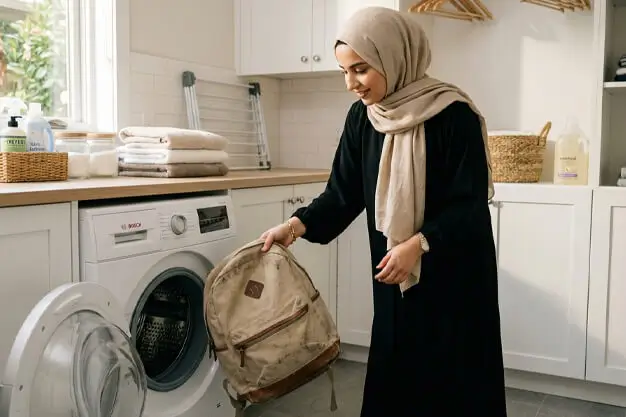
If the label says it is okay, you can wash a canvas backpack in the machine. However, it is important to take precautions to protect both the bag and your machine.
Prepare the Backpack
Turn the bag inside out if possible. This protects the exterior finish. Close all zippers and buckles to prevent them from snagging on the drum. Place the bag inside a pillowcase or mesh laundry bag. This acts as a buffer against the mechanical action of the wash cycle.
Choose the Right Settings
Always select a cold water wash to prevent the canvas from shrinking. Set the machine to the “Gentle” or “Delicate” cycle. This reduces the spinning speed, which prevents the bag from losing its shape. Use a minimal amount of detergent and skip the fabric softener, as it can leave a residue on canvas.
Drying Your Canvas Backpack
Proper drying is just as important as washing when it comes to preserving your canvas backpack.
Air Dry Properly
The best way to air-dry backpack items is to hang them in a well-ventilated spot. Keep the bag out of direct sunlight. The sun’s UV rays act like a natural bleach, fading the colors of your canvas quickly. A shaded balcony or a well-ventilated room with a fan works best. Open all the zippers so air can circulate through every pocket.
Maintain Shape
Canvas becomes heavy and floppy when wet. To prevent the bag from drying into a crushed shape, stuff the interior with clean, dry towels. This absorbs moisture from the inside while helping the bag stand upright. Change the towels after an hour if they become soaked.
What to Avoid
Never put a canvas bag in a tumble dryer. The heat will shrink the fabric and might melt any plastic internal supports or waterproof liners. Do not use an iron to speed up the process. If the bag is wrinkled, the wrinkles usually fall out naturally as you use the bag.

Removing Stubborn Stains and Odors
Sometimes a standard wash isn’t enough. If your bag still smells like old gym clothes or has a grease spot, you need advanced tactics.
Treating Common Stains
For oil or grease, apply cornstarch or talcum powder to the spot. Let it sit for several hours to soak up the oil, then brush it away. For grass stains, a vinegar-and-water mixture can help lift the green pigment. Always rinse the area after treating it to ensure no acidic residue remains. These tips for cleaning canvas backpacks help tackle the toughest messes.
Deodorizing Techniques
If a funky smell persists, use baking soda. Sprinkle a generous amount inside the dry backpack. Zip it up and leave it overnight. Shake it out the next morning. For a fresher scent, use a light fabric spray, but ensure it is safe for the canvas to avoid damage. Avoid heavy perfumes that just mask the odor.
When to Seek Professional Help
For bags with complex construction, leather accents, or persistent mold, consider professional help. You should know when to choose Love2Laundry for your bag and shoe spa needs when the DIY route feels risky. We offer both dry and wet cleaning options tailored to the specific fabric of your gear.
Professional, reliable laundry services use industrial-grade deodorizers that are safe for the environment and your bag. You can check our pricing online to see how affordable it is to save a premium bag. Simply contact us to book a pickup and let the experts handle the heavy lifting.
Maintaining Your Canvas Backpack
Understanding the best practices for cleaning canvas backpacks is only half the battle; the other half is prevention. Treating your bag with care between deep cleans helps keep the fabric vibrant and the fibers resilient against wear and tear.
Proper maintenance reduces the need for heavy scrubbing, which is one of the best tips for cleaning canvas backpacks and preserving the material’s texture. By adopting a proactive mindset, you can keep your bag looking like it just came off the shelf.
Regular Cleaning
You should not wait for a visible layer of crust to form before you wash a canvas backpack. Aim for a light cleaning every few months, or more frequently if you use it for hiking or gym sessions.
A quick wipe-down with a damp microfiber cloth once a week can remove surface dust before it settles into the weave. Consistent attention ensures that odors never have the chance to become “baked in” to the fabric.
Preventing Stains
The easiest way to remove stains from canvas bag surfaces is to make sure they never happen. Use internal organizers or plastic liners for pens and toiletries to prevent leaks. If you are carrying lunch, ensure containers are airtight to avoid grease spots.
If a spill does occur, address it immediately. Blotting a fresh spill with a napkin can prevent a permanent stain that may require professional dry-cleaning backpack services later.
Proper Storage
When your bag is not in use, where you put it matters. Always store it in a dry, cool area with plenty of airflow. Never leave a backpack at the bottom of a dark, cramped closet where moisture can get trapped, as this leads to mildew.
If you are storing it for a long period, avoid hanging it by the straps, as the constant tension can cause them to stretch and lose their shape. Instead, place it flat or upright on a shelf.
Waterproofing Tips
While canvas is naturally sturdy, it is not inherently waterproof. Applying a high-quality waterproofing spray can create a protective barrier that repels liquid and dirt. Before applying these coatings, ensure the bag is completely clean and dry.
Spray in a well-ventilated area and apply thin, even coats rather than one thick layer. This extra step makes future cleaning canvas backpacks much easier, as spills will bead up on the surface rather than soaking into the fibers.
FAQs – Cleaning Canvas Backpacks
What’s the best way to clean a canvas bag?
The most effective method involves hand washing with lukewarm water and a mild soap. This approach prevents shrinkage and maintains the fabric’s structural integrity.
Can baking soda clean canvas bags?
This powder works wonders for neutralizing deep odors and lifting light stains when mixed into a paste. It is a safe and natural way to refresh your bag without harsh chemicals.
How do you clean a dirty canvas bag?
Start by brushing off loose dirt, and then scrub the fabric with a soft brush and soapy water. Rinse the material thoroughly and let it air dry away from direct heat or sun.
Keep Your Canvas Backpack Fresh and Long-Lasting
Properly cleaning canvas backpacks requires patience and the right techniques. By taking the time to prepare your bag, choosing the appropriate wash method, and drying it carefully, you protect your investment. Remember that regular maintenance is much easier than trying to fix a year’s worth of accumulated grime.
These tips for cleaning canvas backpacks help keep your gear functional and stylish for every adventure. If you’re dealing with a stubborn stain or a delicate designer piece, don’t hesitate to use professional laundry and dry cleaning services like Love2Laundry.
Wehave the tools to wash a canvas backpack or even dry-clean backpack items with precision. A clean bag is a sign of a well-prepared traveler. Keep your canvas looking new, and it will serve you faithfully for many years to come.