How to Clean a Mattress in Hot, Humid Weather: Beat Odors, Moisture & Bacteria Fast

Maintaining a hygienic sleeping environment is challenging when you need to clean a mattress in tropical or desert climates. In regions like the UAE, the combination of extreme heat and high humidity creates a breeding ground for invisible threats. When temperatures soar, your body naturally produces more sweat to stay cool.
This moisture seeps directly into your bedding. Without proper care, your bed becomes a reservoir for salt, oils, and skin cells. These elements invite dust mites and bacterial colonies to thrive. In humid weather, moisture does not evaporate quickly. Instead, it gets trapped within the foam or spring layers.
This leads to persistent odors and an increased risk of mold growth. Knowing how to clean a mattress effectively is not just about aesthetics; it is a vital health requirement. Timely intervention prevents respiratory issues and skin allergies. A fresh bed supports better sleep quality, which is essential for your daily energy and long-term well-being.
Why Mattress Cleaning Is Essential in Hot & Humid Weather
High humidity acts as a sealant for moisture. When the air is thick with water vapor, the sweat absorbed by your bed has nowhere to go. It stays trapped in the fibers. This dampness triggers a chemical reaction that produces sour smells. Bacteria love these conditions. They multiply rapidly in warm, moist environments.
In places with year-round heat, the “off-season” for allergens does not exist. Dust mites do not die off in a cold winter. They remain active every single month. This constant biological activity can lead to chronic congestion or asthma flare-ups.
Regular mattress care is far more critical in the UAE than in temperate zones. In cooler climates, a bed may remain naturally dry. In a humid climate, you must actively manage the moisture levels to prevent the internal core from rotting or developing deep-seated fungi.
Signs Your Mattress Needs Immediate Cleaning
You should not wait for visible dirt to take action. The first sign is often a faint, musty odor that lingers even after you change the sheets. If you wake up with a stuffy nose or itchy eyes, it is a clear indicator of dust mite buildup.
Look for physical changes, too. Yellowish or brownish circles often indicate dried sweat or body oils. If the surface feels slightly clammy or damp to the touch in the morning, moisture is being retained.
Visible discoloration or small black dots are emergency signals. These dots are often mold spores. If you notice them, clean the mattress immediately to prevent further spread. Early detection helps you avoid replacing an expensive piece of furniture prematurely.

What You’ll Need Before Cleaning Your Mattress
Preparation is key to avoiding excess moisture. You will need a vacuum cleaner with a HEPA filter and a high-suction upholstery attachment. Gather a box of baking soda, which acts as a natural deodorizer and moisture absorber.
You also need a mild detergent or an unscented laundry detergent for delicate fibers. Have several clean, white microfiber cloths ready. Avoid using colored rags, as the dye may transfer to the bed. Using gloves is a good idea to protect your skin from allergens.
Always choose products that are safe for humid environments. Avoid heavy shampoos that require lots of water. The goal is to use “dry” or low-moisture methods to ensure the bed stays as dry as possible during the process.
Step-by-Step Guide to Cleaning a Mattress in Humid Weather
Cleaning in a humid climate requires a strategy focused on speed and airflow. You cannot afford to let the bed sit damp for hours. The process involves removing surface debris, treating stains with minimal liquid, and using powders to pull out deep moisture.
Never soak the material. Excessive water will migrate to the center of the foam and stay there for days. This creates an ideal environment for mold. Always keep fans running or the air conditioning on during every step. This helps expel humid air from the room.
Following a strict sequence ensures you don’t miss any hidden bacteria or allergens.
Remove Bedding and Wash It Thoroughly
Strip the bed completely. This includes the sheets, pillowcases, and the protector. You should wash a duvet & care for it by following the label instructions to remove dust. If you use high-quality fabrics, you must know how to wash and care for your linen sheets to prevent shrinking.
Use a cold water wash for delicate items, but use the highest temperature allowed for cotton to kill bacteria. If your machine allows, wash a comforter in a washing machine cycle that includes an extra rinse cycle. This removes all traces of body oils. Make sure every item is 100% dry. Even a slightly damp sheet can trap new moisture against the bed surface, undoing your hard work.
Vacuum the Mattress to Remove Dust & Allergens
Vacuuming is the most effective way to clean mattress at home. Use the upholstery tool to go over the entire top surface. Use slow, overlapping strokes to ensure the suction pulls out deep-seated dust.
Pay close attention to the seams and the piping around the edges. This is where dust mites hide and lay eggs. Flip the bed if it is double-sided, and vacuum the underside as well. Don’t forget the sides. In humid weather, dust can form a sticky film when mixed with sweat. Vacuuming first prevents this film from forming during the liquid cleaning stage.
Spot Clean Sweat, Urine, and Food Stains
If you find marks, use spot cleaning techniques. Dip a cloth into a solution of water and a small amount of soap. Wring it out until it is barely damp. Blot the stain gently. Never rub. Rubbing pushes the liquid deeper into the padding.
If you are dealing with a tough sweat stain, use a specialized enzymatic cleaner, but apply it sparingly. The priority is to keep the liquid on the surface. After blotting, use a dry towel to press down on the area.
This pulls the moisture back out of the fabric. In a humid room, this step must be done quickly. If the area remains wet for more than an hour, use a hairdryer on a cool setting to expedite the process.
Deodorize and Absorb Moisture with Baking Soda
Baking soda is your best friend in a humid climate. Sieve a generous layer of it over the entire surface. This powder absorbs odors and liquid moisture from the top layers of the fabric. Let it sit for at least six hours.
Eight hours is even better. It neutralizes the acidic smell of sweat. Because the air is humid, the baking soda might feel slightly clumpy after a few hours. This is a good sign; it means it is working. This is one of the most effective tips to deep-clean a mattress without using harmful chemicals or excessive water.
Final Vacuum and Fast Drying Techniques
Once the baking soda has done its job, vacuum it up thoroughly. You may need to run the bed twice to remove all grains. Leaving powder behind can attract more moisture later.
After the final vacuum, focus on airflow. Open the windows when outdoor humidity is low; in the UAE, it is usually better to keep them closed. Turn the air conditioning to a “dry” mode—position floor fans so they blow directly across the surface of the bed.
This creates a high-pressure zone that encourages any remaining dampness to evaporate. This ensures you clean a mattress safely without leaving it vulnerable to fungal growth.
How to Safely Dry a Mattress in Hot & Humid Conditions
In many countries, people put their beds outside in the sun. In a humid climate, this is a mistake. Outdoor air often contains more moisture than indoor air. The sun might be hot, but the humidity will prevent the core from drying.
Always dry your bed indoors. Use a dehumidifier if available. If not, the AC is your strongest tool. It strips moisture from the room. Keep the bed stripped of all linens until it feels bone-dry and cool to the touch. If you feel any warmth or “sponginess,” it is still wet. Using a mattress before it is fully dry will cause a sour smell within 24 hours.
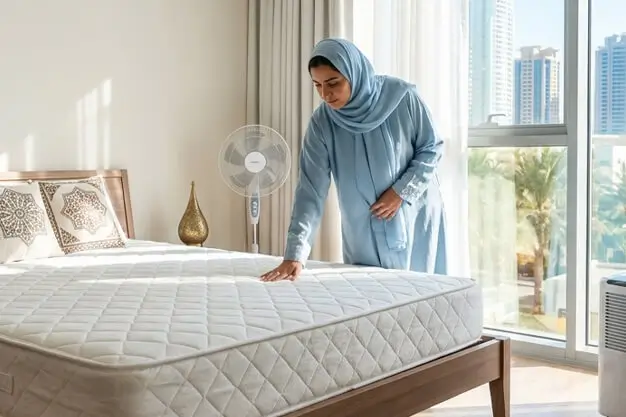
Mattress Type-Specific Cleaning Tips
Different materials react differently to humidity. A one-size-fits-all approach can ruin your investment. You must adapt your methods to the specific construction of your bed to avoid structural damage.
Memory Foam Mattresses
Memory foam is like a giant sponge. It is designed to be dense. This density means that once water enters, it is almost impossible to remove. You should never use a steam cleaner on memory foam in a humid climate.
To clean a mattress made of foam, stick to dry methods. Use more baking soda and less liquid. If you must spot-clean, use a nearly dry cloth. Foam also retains heat, which increases sweating. Using a breathable protector is the best way to keep these beds clean between deep sessions.
Spring and Hybrid Mattresses
Spring mattresses have more “dead space” inside. This improves airflow, helping them dry faster. However, metal springs can rust if internal humidity remains high for too long.
Hybrid models contain both springs and foam. They require a balanced approach. While they dry faster than pure foam, the risk of mold in the transition layers is high. When you clean mattress at home for these types, ensure you vacuum the sides thoroughly to encourage air to move through the internal structure.
How Often Should You Clean Your Mattress in Humid Climates?
In the UAE, you should perform a surface cleaning of a mattress session every three months. This includes vacuuming and baking soda treatment. Because of the constant heat, skin cell shedding and sweating are higher than average.
You should look for tips to deep clean a mattress at least twice a year. If you have pets or are allergic, increase this to every three months. Frequent cleaning prevents the buildup of allergens that can ruin your sleep. It is much easier to do small, regular cleanings than to try to save a bed that has been neglected for a year in high humidity.
Common Mattress Cleaning Mistakes to Avoid
The biggest mistake is over-wetting. People often think that more water means cleaner. In a humid environment, this is a recipe for disaster. Another error is skipping the vacuuming step. If you wet a dusty bed, you create a “mud” that stains the fabric permanently.
Avoid using harsh bleach or ammonia. These chemicals can break down the fibers and the foam. They also leave behind strong fumes that are hard to clear in an air-conditioned room. Lastly, never put the sheets back on too early. Even a 5% moisture level can lead to mold growth once the bed is covered and your body heat is added.
Professional Mattress Cleaning vs DIY Cleaning
While you can clean a mattress yourself, professional mattress cleaning services offer distinct advantages. Professionals use specialized extraction tools. These machines inject a cleaning solution and immediately suck it back out with immense pressure.
This process removes more dirt than a home vacuum ever could. More importantly, professionals use high-powered air movers. These are industrial fans that dry the bed in a fraction of the time.
For those in the UAE, professional bed mattress cleaning services are often the safest choice to ensure no moisture remains deep inside the layers. It saves time and guarantees a level of hygiene that is hard to achieve with household tools.
Why Choose Love2Laundry for Mattress Cleaning in the UAE
Love2Laundry understands the unique challenges of the local climate. We provide expert bed mattress cleaning services that are tailored for high-humidity environments. Our team uses advanced equipment that prioritizes moisture control.
We don’t just wash; we sanitize. We adhere to strict laundry and dry-cleaning standards to ensure your bed is free of bacteria and allergens. Our process is designed to be convenient for busy professionals. You can check our pricing online to see how affordable it is to protect your health. We make it easy to maintain a fresh home without the stress of DIY drying. If you are ready to refresh your sleep space, contact us today.
Tips to Keep Your Mattress Fresh All Year Round
Prevention is the best strategy. Use a high-quality, breathable mattress protector. This acts as a barrier against sweat and skin cells. Every morning, leave your bed unmade for at least 30 minutes. This allows the moisture from your body to evaporate before you seal it in with a comforter.
Improve your room’s ventilation. Even a small crack in a window or a ceiling fan can make a big difference. Avoid going to bed with damp hair or skin. These small habits reduce the amount of moisture the bed absorbs. Regular maintenance ensures that when you clean a mattress, the process is easier and more effective.
FAQs – Clean a Mattress
How to remove brown stains from a mattress?
Apply a paste of baking soda and a tiny amount of water to the spot. Let it dry completely before vacuuming the residue away to lift the discoloration.
Does baking soda really clean a mattress?
It does not remove dirt like soap, but it effectively neutralizes odors and draws out moisture. It is an essential tool for maintaining hygiene without using excess water.
Is it better to clean a mattress wet or dry?
Dry cleaning is always safer for the internal structure and foam layers. Wet cleaning should be performed only by professionals using high-powered extraction equipment to prevent mold growth.
Final Thoughts on Mattress Hygiene in Hot & Humid Weather
To clean a mattress effectively in the heat of the UAE, you must prioritize moisture management. The combination of sweat and humidity is a constant threat to your bedding. By following a structured routine of vacuuming, baking soda treatments, and careful spot cleaning, you can keep allergens at bay.
Remember to wash mattress protectors and sheets regularly to provide a fresh outer layer. If the task feels overwhelming, professional bed mattress cleaning services are a reliable solution. They provide the deep extraction and fast drying times that home methods cannot match.
These tips to deep clean a mattress will help you extend the life of your furniture and improve your respiratory health. Whether you choose to clean mattress at home or hire experts, consistency is the key. Don’t let the humid weather compromise your comfort. A clean bed is the foundation of a healthy lifestyle and a restful night’s sleep in any climate.